
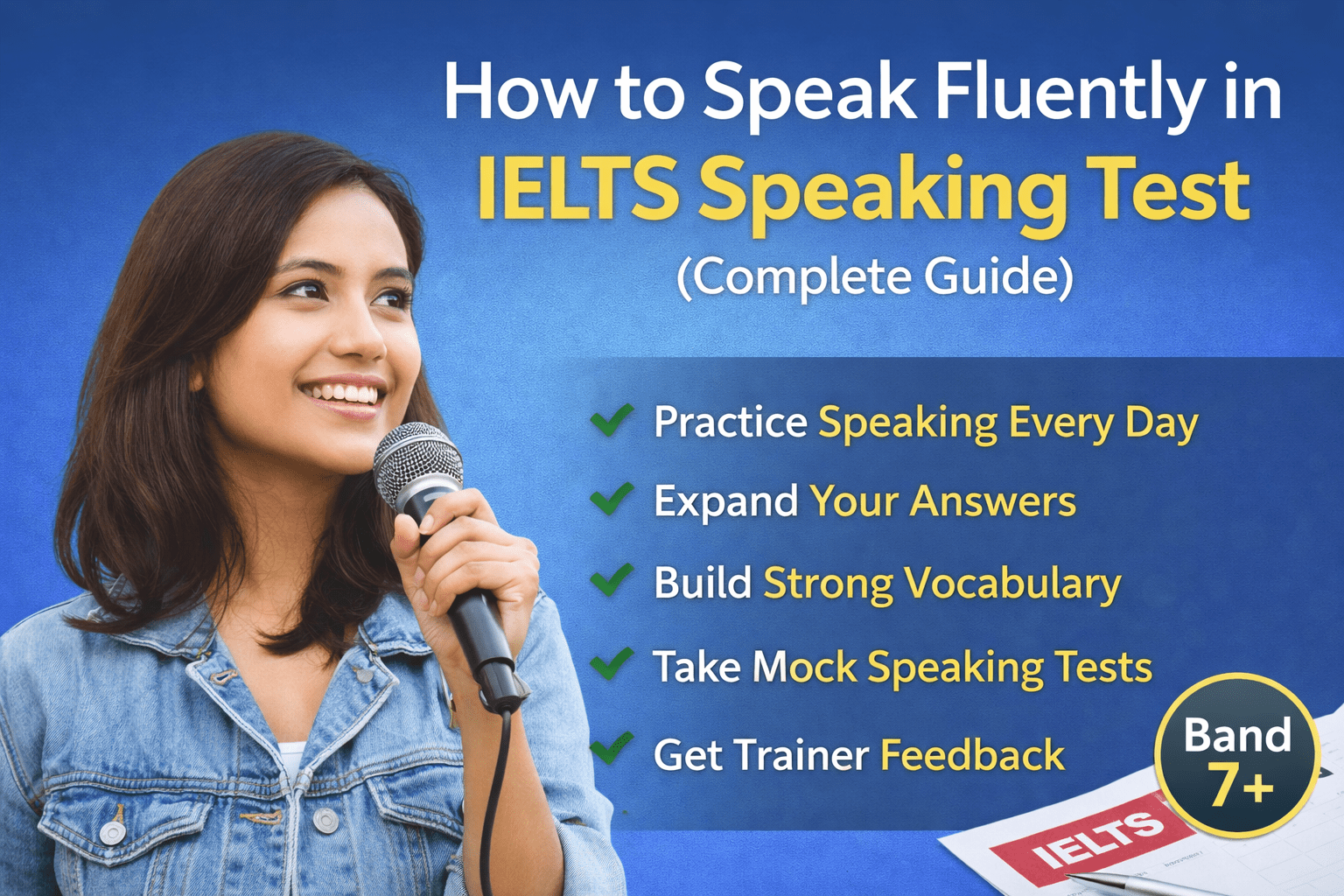
The IELTS Speaking test is one of the most important sections of the IELTS exam. Many
students have good vocabulary and grammar, but they still struggle to speak fluently
during the interview.
Fluency in IELTS speaking means speaking naturally, clearly, and confidently without
long pauses. If you want to achieve a Band 7, Band 8, or higher, you must develop strong
communication skills and practice regularly.
At IELTS With Viv, trainers focus on structured strategies, personalized feedback, and
guided practice sessions that help students improve their speaking performance and
confidence.
In this guide, you will learn how to improve fluency in the IELTS speaking test and
perform confidently during the exam.
Understand the IELTS Speaking Test
Format
Before improving fluency, it is important to understand the structure of the speaking test.
The IELTS speaking test usually has three parts:
Part 1 – Introduction and Interview
The examiner asks basic questions about topics such as:
- hobbies
- studies
- work
- daily life
Part 2 – Long Turn
You receive a cue card topic and speak for about 1–2 minutes.
Part 3 – Discussion
The examiner asks more detailed questions related to the topic.
Understanding this format helps you prepare answers more confidently.
Practice Speaking Every Day
The best way to improve fluency is consistent speaking practice.
Many students understand English but rarely speak it. Regular speaking practice helps you:
- think faster in English
- improve pronunciation
- reduce hesitation
At IELTS With Viv, students practice speaking regularly through structured training
sessions and feedback-based learning that helps them improve their performance in every
module.
Learn to Expand Your Answers
One common mistake student make is giving very short answers.
Example:
“Yes, I like reading.”
Instead expand your answer:
“Yes, I really enjoy reading because it helps me relax and learn new ideas. I usually read
books related to personal development and travel.”
Expanding your answers helps demonstrate:
- fluency
- vocabulary range
- communication ability
Use Linking Words While Speaking
Using linking words helps your speech sound natural and fluent.
Examples:
- however
- for example,
- in addition
- on the other hand
- because of this
These connectors make your answers longer and more structured.
Improve Vocabulary for IELTS Speaking
Vocabulary plays an important role in achieving a higher band score.
Instead of simple words, try using more descriptive vocabulary.
Example:
Simple:
“good place”
Better:
“beautiful place” or “peaceful location”
Improving vocabulary helps show your language range, which examiners evaluate during
the speaking test.
Focus on Pronunciation and Clarity
Pronunciation does not mean speaking with a foreign accent. The examiner only needs to
understand you clearly.
To improve pronunciation:
- listen to English conversations
- practice speaking aloud
- record your answers and review them
Take Mock Speaking Tests
Mock tests are extremely helpful for IELTS preparation.
They help you:
- understand the real exam environment
- manage time while speaking
- identify your weaknesses
At IELTS With Viv, students receive practice sessions, assignments, and mock tests that
simulate the real IELTS exam experience.
These practice sessions help students build confidence and improve their speaking
performance.
Get Feedback from Expert Trainers
One of the fastest ways to improve fluency is getting professional feedback.
Expert trainers can help you:
- correct grammar mistakes
- improve vocabulary usage
- develop better speaking strategies
The training approach at IELTS With Viv includes personalized coaching and detailed
feedback designed to help students achieve high IELTS scores.
Build Confidence While Speaking
Confidence plays a major role in IELTS speaking.
Many students know the answers but feel nervous during the test.
To build confidence:
- practice speaking regularly
- simulate exam situations
- focus on communicating clearly rather than speaking perfectly
Confidence helps you speak more naturally and fluently.
Conclusion
Improving fluency in the IELTS speaking test requires consistent practice, better
vocabulary, structured answers, and expert guidance.
Students who practice regularly, take mock tests, and receive feedback from experienced
trainers often perform much better in the exam.
With the right strategies and preparation methods, achieving a high IELTS speaking band
score becomes much easier.
Frequently Asked Questions (FAQs)
How can I speak fluently in the IELTS speaking test?
To speak fluently in the IELTS speaking test, you should practice speaking regularly,
expand your answers, improve vocabulary, and take mock speaking tests.
How can I improve my IELTS speaking score quickly?
You can improve your IELTS speaking score by practicing daily, using linking words,
expanding your answers, and receiving feedback from experienced trainers.
What is the best way to practice speaking for IELTS?
The best way to practice IELTS speaking is by participating in mock tests, speaking
regularly with trainers or partners, and reviewing your performance.